
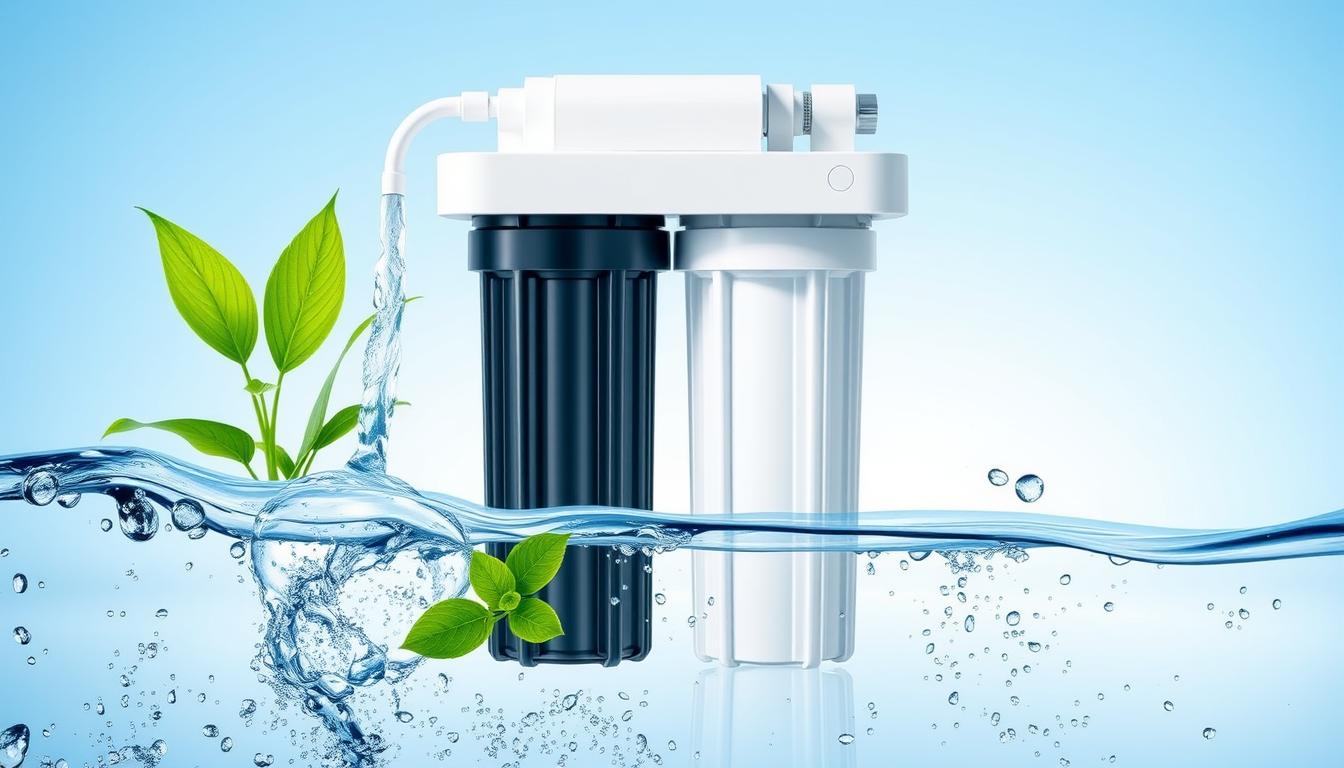
Many homeowners think about getting a water treatment system with chlorine removal. This is because city water often has chlorine to keep it safe. Water filters and softeners can make water better, but they solve different problems. Some advanced softeners, like the Aquasential® Smart High-Efficiency Municipal Water Softener, handle both hardness and chlorine.
Chlorine is used to keep city water safe, but it can cause bad smells and health issues. A water treatment system that removes chlorine can bring many benefits to your home and family.
Table of Contents
Key Takeaways
- Municipal drinking water is typically chlorinated for disinfection, which can cause unpleasant odors and potential health concerns.
- Water treatment systems with chlorine removal capabilities can address both hardness and chlorine issues, improving overall water quality.
- Chlorine can react with organic matter to form disinfection byproducts (DBPs) that have been linked to potential health risks.
- Removing chlorine from water can improve the taste and smell, as well as reduce exposure to harmful chemicals.
- Installing a chlorine removal system can contribute to a healthier environment by reducing the need for bottled water and harsh chemical treatments.
Understanding Chlorine in Municipal Water Supply
Chlorine is a key element in water treatment. It kills harmful germs like bacteria and viruses, making our drinking water safe. The Environmental Protection Agency (EPA) says it’s safe up to 4 mg/L in our water.
What is Chlorine and Its Purpose in Water Treatment
Chlorine has been used in U.S. water systems for over a century. It’s a powerful way to clean water. Before chlorine, typhoid killed over 26 out of every 100,000 people in the U.S. Now, thanks to chlorine, that number has dropped a lot.
Common Levels of Chlorine in Tap Water
The EPA controls the levels of disinfectants in our water. Chlorine, chloramine, and chlorine dioxide are all monitored. Free chlorine in tap water is usually between 0.5 and 2.0 PPM, which is safe.
Why Cities Use Chlorine for Disinfection
Cities use chlorine to keep us safe from waterborne diseases. It’s used in 98% of water treatment plants. But, chlorine can create harmful byproducts when it mixes with organic matter. That’s why the EPA watches its levels closely.
| Disinfectant | Maximum Allowable Level |
|---|---|
| Chlorine | 4 PPM |
| Chloramine | 4 PPM |
| Chlorine Dioxide | 0.8 PPM |
The Impact of Chlorinated Water on Daily Life
Chlorinated water is common in our tap water. It affects our daily life in many ways. From the taste and smell to our skin and hair, chlorine can be a problem.
Chlorinated water often smells like chemicals. This smell can be really unpleasant when drinking or cooking. The taste of chlorine can also ruin the flavor of water and food.
Chlorine in water can harm our health too. It can cause skin irritation and make hair dry and brittle. Chlorine takes away the natural oils that keep our skin and hair healthy.
- Noticeable chemical-like odor in tap water
- Unpleasant chlorine taste that affects the enjoyment of water and food/beverage preparation
- Skin irritation, dryness, and brittle hair due to the stripping of natural oils
For a better daily life, consider a chemical-free water treatment system. These systems, with chlorine filtration or water dechlorination, can change everything. They remove chlorine, making water taste and smell better. They also protect our skin and hair from chlorine damage.
Health Risks Associated with Chlorinated Water
Chlorine is used to purify drinking water, but it can be harmful over time. It can create harmful byproducts like trihalomethanes (THMs) and haloacetic acids (HAAs). These have been linked to higher cancer risks.
Formation of Harmful Byproducts
Chlorine reacts with organic matter in water to form harmful byproducts. Research shows a link between long-term exposure to chlorination and an increased risk of bladder cancer.
Long-term Exposure Concerns
Long-term exposure to chlorination and its byproducts can harm the immune system. It can also disrupt the balance of gut microbiome. A study found a possible link between chlorinated water and kidney damage.
Effects on Sensitive Individuals
People with allergies or weakened immune systems are more at risk from chlorine. They may experience respiratory irritation, eye and skin irritation, and asthma worsening. Frequent swimmers may also face skin issues like dry skin, acne, eczema, or psoriasis flare-ups.
To reduce health risks from chlorinated water, consider water treatment options. These can effectively remove or reduce chlorine levels. Choosing the right system for your home can ensure a safer, healthier water supply. It protects you and your family from chlorine’s long-term effects.
Benefits of Water Treatment with Chlorine Removal
Removing chlorine from your water can make a big difference. It improves the taste and smell of your drinking water. Water purification systems that remove chlorine make your water better for drinking and skin care.
Chlorine-free water tastes better. Chlorine can give water a bad taste and smell. Without it, your drinks and food will taste fresher and more natural.
Chlorine reduction also helps your skin and hair. Chlorinated water can dry out and irritate your skin and hair. This can cause problems like eczema and brittle hair. Safe drinking water without chlorine is gentler and promotes healthier skin and hair.
Another big plus is the lower risk of harmful chemicals. Chlorine can create harmful byproducts during treatment. These can increase the risk of cancer and other health issues. By removing chlorine, you reduce your family’s exposure to these risks.
Lastly, using a system to remove chlorine is good for the environment. It cuts down on the need for bottled water and reduces the harm caused by harsh chemicals. It’s a green choice for your home.
Different Types of Chlorine Removal Systems
There are many ways to remove chlorine from your water. These methods not only give you chlorine-free water. They also remove other harmful substances, making your water chemical-free.
Activated Carbon Filtration
Activated carbon filtration is a top pick for chlorine filtration. It uses coconut shells or charcoal to grab onto chlorine and its byproducts. This makes your water taste fresh and clean. Plus, it keeps important minerals in your water.
Reverse Osmosis Systems
Reverse osmosis (RO) systems push water through a thin membrane. This removes chlorine and many other bad stuff. RO systems are a great way to get chemical-free water treatment for your home.
Whole House Filtration Options
For treating all your home’s water, consider a whole-house filtration system. These systems filter all the water coming into your home. This means you get chlorine-free water everywhere. BOROUX filters, for example, use GAC to remove chlorine while keeping good minerals.
Water Softening vs. Chlorine Filtration
Choosing between a water dechlorination system and a traditional water softener is important. Both systems improve water quality but in different ways.
Water softeners remove minerals like calcium and magnesium to soften water. This prevents scale buildup and makes soap and detergents work better. It also helps your appliances last longer.
Water treatment with chlorine removal systems, however, target a wider range of contaminants. They remove chlorine, heavy metals, and organic compounds from your water.
- Water softeners use an ion exchange process to replace hard water minerals with sodium or potassium ions, effectively softening the water.
- Chlorine filtration systems, such as those with activated carbon or reverse osmosis technology, can remove chlorine and a wide array of other impurities from your water supply.
- Some advanced systems, like the Aquasential® Smart High-Efficiency Municipal Water Softener, combine both softening and chlorine filtration functions for comprehensive water treatment.
Choosing between a water softener and a chlorine filtration system depends on your water quality concerns. Home water testing can help you decide. You might need a water softener, a chlorine filtration system, or both.

Cost Considerations and System Maintenance
When you choose a water treatment system, think about the upfront costs and ongoing upkeep. The system type, how much water you use, and any water quality problems you face will affect the total cost.
Basic under-sink reverse osmosis systems usually cost between $200 and $600. Whole-house systems can range from $1,000 to $5,000 or more. For basic whole-house water purification systems, expect to pay $500 to $2,000. More advanced systems can cost $2,000 to $5,000 or more.
Keeping your chlorine removal system in top shape is key. This means replacing filters, membranes, or other parts as needed. Systems like those from BOROUX are built for easy upkeep and long life, reducing the need for frequent replacements.
| System Type | Average Cost Range |
|---|---|
| Under-sink Reverse Osmosis | $200 to $600 |
| Whole-house Reverse Osmosis | $1,000 to $5,000+ |
| Basic Whole-house Filtration | $500 to $2,000 |
| Advanced Whole-house Filtration | $2,000 to $5,000+ |
By weighing the initial cost and maintenance needs, you can pick the best water purification system for your home and budget. This ensures you have clean, chlorine-free water for many years.
Choosing the Right System for Your Home
Choosing the right chlorine removal system for your home involves several important factors. First, think about where your water comes from. Is it from the city or a private well? Knowing this helps figure out what contaminants you need to get rid of. Also, check your water’s hardness level, as it affects the type of filter you’ll need.
A professional water test is crucial in this process. It gives you detailed info about your water’s makeup. This info helps you pick the best chlorine reduction solution. It ensures you have safe drinking water and a chlorine-free home.
Think about how much water your family uses every day and where you can put the system. This helps you find a system that fits your needs without taking up too much space. Some systems even come with smart controls and apps for easier use and monitoring.
Talking to water treatment experts can also help a lot. They can suggest the best system for you based on your specific needs. This way, you get the right chlorine reduction, safe drinking water, and better water quality.

By considering these factors and getting advice from experts, you can pick the perfect chlorine removal system for your home. It will give you the safe drinking water your family needs.
Conclusion
Chlorine is key for water disinfection, but removing it at use points has many benefits. It improves taste, odor, and may boost health. Water treatment with chlorine removal systems can greatly improve water quality.
Knowing about activated carbon filtration and reverse osmosis systems helps. These options depend on cost, upkeep, and personal needs. Homeowners can choose the best chlorine elimination and dechlorination solutions.
Choosing good water purification tech makes water safer and more enjoyable. Homeowners can weigh chlorinated water’s pros and cons. Reliable chlorine removal systems offer a great way to better water quality and health.
Removing chlorine from water is a smart move for homeowners. It ensures cleaner, healthier water for families. This choice is good for health and the planet, making it a smart investment.
Take Action Today
Start your plant-based water purification journey:
- Subscribe to our Newsletter – Get expert tips on sustainable water treatment, real-world case studies, and practical solutions to improve water quality in your home and community.