

Reading time (7 minutes)
⚡ Quick Answer: Upcycled clothing turns old, discarded garments into unique fashion pieces and reduces textile waste by up to 90%, while carbon emissions can be decreased by 25%. If you opt for upcycled fashion, you will enable yourself to express your distinctive personal style. Moreover, you will help avoid landfills that receive 92 million tons of garments annually. Such industries now contribute 8-10% towards global greenhouse gas emissions, so upcycled clothing is among the most impactful choices for the eco-conscious customer . Jump to: Where to Find Upcycled Fashion | Winter 2025-2026 Trends| Styling Tips
Table of Contents
Introduction
Upcycled clothing is the most transformative movement to hit the rapidly evolving world of sustainable fashion in 2025-2026. Considering that the fashion industry produces 80-150 billion garments each year, accounting for 8-10% of global greenhouse gas emissions, upcycled clothing becomes a game-changing prospect. Transforming discarded materials into one-of-a-kind, high-quality fashion is reimagining the way people conceptualize style and sustainability. Whether it’s upcycling clothes from your own closet or shopping for designer pieces, here’s everything you need to know about this season’s fashion landscape, winter 2025-2026.
What Is Upcycled Clothing?
It describes the creative activity of reworking old, worn-out, or discarded clothes to create new, value-added fashion products. Other than regular recycling, which breaks down materials to their basic parts, upcycling does not compromise the integrity of fabrics but reinvents their use and beauty.
The Difference Between Upcycling and Recycling
While both processes contribute to sustainability, they differ significantly:
- Upcycling: Transforms existing garments into new, often more valuable items without breaking down the original material
- Recycling: Breaks down textiles into raw materials to create new fabrics from scratch
- Upcycled clothing reduces waste more effectively by requiring less energy and water
- The creative process adds unique character and artisanal value to each piece
How Upcycling Transforms Fashion
The transformation process involves several innovative techniques:
- Deconstructing vintage garments to source quality materials
- Combining different textiles to create one-of-a-kind pieces
- Redesigning silhouettes to reflect current trends while maintaining sustainability
- Embellishing and customizing to add personal touches
Designers scouring thrift stores, flea markets, and textile warehouses discover hidden gems that become the foundation for stunning upcycled clothing collections.
Winter 2025-2026: The Perfect Season for Upcycled Clothing
This winter season brings bold colors, animal prints, and statement accessories that perfectly complement the unique nature of upcycled fashion. The shift away from quiet luxury toward expressive, personality-driven style makes upcycled clothing more relevant than ever.
Trending Upcycled Styles for Winter 2025-2026
Bold Animal Prints Leopard, cow print, snakeskin, and dalmatian patterns are trending this winter, making upcycled vintage pieces with these prints highly sought-after. Treat these prints as neutrals when styling your clothing wardrobe.
Oversized Outerwear Maxi coats, wraps, and roomy outerwear dominate winter 2025-2026. Upcycled oversized coats from vintage materials offer both sustainability and style.
Polka Dots Renaissance Polka dots have moved beyond summer to become a winter staple, perfect for upcycled cardigans and knitwear projects.
Cherry Red & Bold Colors Cherry red coats, cobalt blue scarves, and emerald green knits serve as focal points paired with muted shades. Incorporates these vibrant pops against neutral bases.
Statement Accessories Eye-catching jewelry like brooches, pendant necklaces, oversized sunglasses, leather gloves, and faux fur stoles elevate any outfit—all perfect candidates for upcycling projects.
The Environmental Impact: Why Upcycled Clothing Matters
Fast Fashion’s Devastating Footprint
| Environmental Factor | Fast Fashion Impact | Upcycled Clothing Solution |
|---|---|---|
| Water Consumption | 2,700 liters per cotton shirt | Reduces water usage by up to 90% |
| Climate Emissions | 10% of global total | Cuts carbon emissions by 25% |
| Annual Textile Waste | 92 million tons | Diverts textiles from landfills |
| Garment Lifespan | 50% discarded within 1 year | Extends garment lifecycle significantly |
| Energy Consumption | 200x more than other industries | Minimal energy for transformation |
The fashion industry stands as the second-largest global polluter. Upcycled clothing directly addresses this crisis by:
- Preventing textile waste from reaching landfills
- Reducing demand for new resource-intensive production
- Lowering carbon emissions associated with manufacturing
- Conserving water used in textile production
- Eliminating harmful chemicals from dyeing and processing
Top Benefits of Upcycling
1. Environmental Sustainability
Every upcycled clothing purchase represents a direct positive impact on the environment. By choosing upcycled fashion, you:
- Reduce greenhouse gas emissions
- Conserve precious water resources
- Prevent textile waste accumulation
- Support circular economy principles
- Minimize pollution from manufacturing processes
2. Unique Personal Style Expression
Upcycled clothing offers unparalleled individuality:
- One-of-a-kind pieces that no one else will own
- Storytelling through fashion with garments that have history
- Creative combinations not available in mainstream stores
- Distinctive character that mass-produced items lack
- Artisanal quality reflecting skilled craftsmanship
3. Superior Quality and Longevity
Upcycled garments often feature:
- Better quality materials from vintage sources
- Durable construction designed to last decades
- Timeless design elements that transcend trends
- Attention to detail from conscious creators
- Reinforced construction during the upcycling process
4. Supporting Sustainable Fashion Movement
Your upcycled clothing purchases directly support:
- Independent designers and artisans
- Small, eco-conscious businesses
- Ethical labor practices
- Innovation in sustainable fashion
- Community-based circular economy initiatives
Where to Find the Best Upcycled Clothing

Online Marketplaces
Specialized Platforms:
- RE.STATEMENT: Curated upcycled designer collections
- Etsy: Thousands of independent upcycling artisans
- Depop: Vintage and upcycled fashion community
- Poshmark: Peer-to-peer upcycled fashion marketplace
Social Media Discovery:
- Instagram hashtags: #upcycledclothing #sustainablefashion #reworkedvintage
- TikTok: Follow upcycling designers showcasing their process
- Pinterest: Inspiration boards for upcycled clothing styling
Physical Locations
Thrift Stores & Vintage Shops:
- Local thrift stores often carry pre-upcycled items
- Vintage boutiques feature curated upcycled collections
- Estate sales offer quality materials for DIY projects
Local Markets & Events:
- Craft fairs highlighting local upcycling artisans
- Pop-up sustainable fashion markets
- Community swap events
- Maker markets featuring upcycled clothing creators
Mainstream Retailers:
- Urban Outfitters: Vintage-inspired upcycled line
- Select department stores: Growing upcycled sections
Leading Upcycled Clothing Brands to Know
Luxury Upcycled Fashion
RE/DONE
- Collaborates with Levi’s and Hanes
- Creates unique denim pieces from vintage jeans
- Premium pricing reflects artisanal quality
Heritage ReFashioned
- Transforms vintage fabrics into luxury handbags
- Accessories that tell stories
- High-end craftsmanship
Affordable Upcycled Clothing Options
| Brand | Specialty | Price Range |
|---|---|---|
| Tonlé | Zero-waste fashion from scraps | $ |
| Urban Outfitters Renewal | Vintage reworked pieces | $ |
| Preloved | Curated upcycled selections | $-$ |
| JJ Vintage | Reworked vintage clothing | $ |
Independent Designer Collections
Zero Waste Daniel
- Creates statement pieces from textile waste
- Bold, fashion-forward designs
- Completely zero-waste production
Psychic Outlaw
- Hand-reworked vintage garments
- Unique embellishments and details
- Limited edition drops
Girl of the Earth
- Nature-inspired upcycled fashion
- Sustainable dyes and materials
- Bohemian aesthetic
Major Brand Collaborations: Burberry partners with Elvis & Kresse to upcycle leather scraps and decommissioned fire hoses into luxury accessories, proving that even heritage brands embrace upcycled clothing principles.
How to Style Upcycled Clothing Like a Fashion Pro
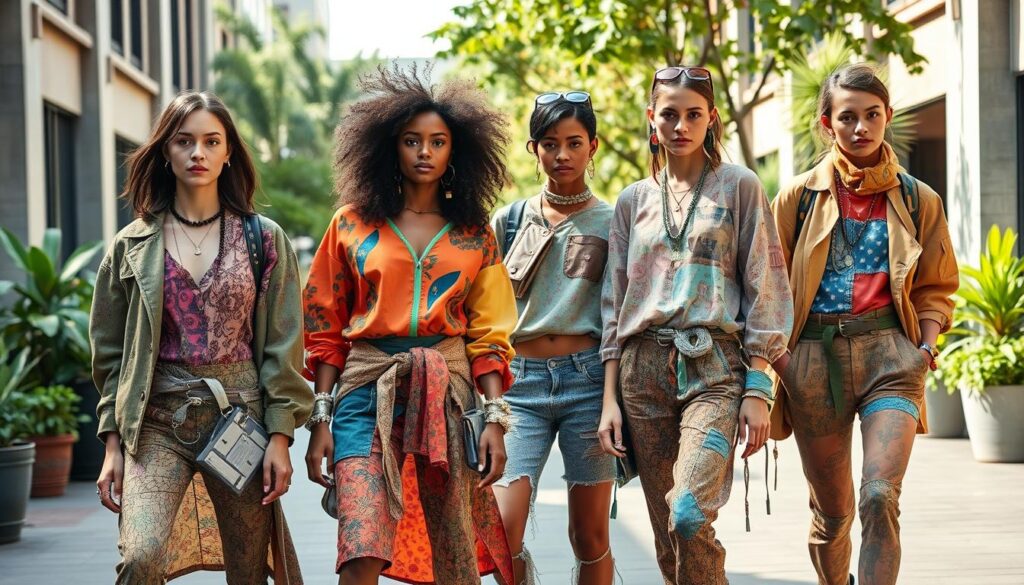
Winter 2025-2026 Styling Tips
Mix Vintage with Modern:
- Pair an upcycled vintage blazer with contemporary jeans
- Combine an upcycled animal print coat with minimalist basics
- Layer upcycled knitwear over modern slip dresses
Embrace Layering:
- Stack multiple upcycled textures for depth
- Mix patterns from different upcycled pieces
- Create contrast between structured and flowing items
Balance Statement Pieces:
- Let bold upcycled items be the focal point
- Pair elaborate upcycled dresses with minimal accessories
- Ground dramatic upcycled outerwear with classic bottoms
Accessorize Thoughtfully:
- Upcycled bags add interest to simple outfits
- Vintage brooches and pendant necklaces make powerful statements this season
- Mix upcycled and new accessories for balance
Creating Capsule Wardrobes with Upcycled Clothing
Build a sustainable wardrobe foundation:
- Start with versatile basics in neutral tones
- Add 2-3 statement upcycled pieces for personality
- Include seasonal upcycled outerwear for functionality
- Invest in quality upcycled accessories that elevate every outfit
- Choose timeless silhouettes that transcend trends
The Future of Upcycled Clothing
Emerging Trends in Sustainable Fashion
Digital Upcycling: Virtual fashion and digital clothing reduce physical production waste while allowing creative expression in online spaces.
Advanced Recycling Technology: New innovations break down mixed fabrics more effectively, expanding materials available for upcycled clothing projects.
3D Printing Applications: Custom upcycled accessories and embellishments created through 3D printing reduce waste while enabling personalization.
AI-Powered Design: Artificial intelligence helps designers optimize upcycling processes and predict fashion trends for smarter upcycled clothing creation.
Blockchain Transparency: Supply chain tracking enables consumers to verify the sustainable origins of their upcycled clothing purchases.
Technology Driving Sustainable Fashion Forward
The intersection of technology and upcycled clothing creates exciting possibilities:
- Smart sorting systems identify quality materials for upcycling
- Digital marketplaces connect designers with materials
- Virtual try-on technology reduces returns and waste
- Automated cutting systems maximize fabric utilization
- Online communities share upcycling techniques and inspiration
DIY Upcycled Clothing: Getting Started
Basic Techniques for Beginners
Essential Skills:
- Basic hand sewing and machine stitching
- Fabric cutting and pattern manipulation
- Dyeing and bleaching techniques
- Embellishment application
- Garment deconstruction
Starter Projects:
- Transform oversized vintage shirts into fitted tops
- Add patches or embroidery to plain jeans
- Create tote bags from old t-shirts
- Crop and hem thrifted sweaters
- Combine multiple damaged items into one complete garment
Materials and Tools
What You’ll Need:
- Quality scissors and rotary cutters
- Sewing machine (or hand-sewing supplies)
- Fabric markers and chalk
- Seam ripper for deconstruction
- Iron and pressing tools
Where to Source Materials:
- Thrift stores and charity shops
- Your own closet’s unworn items
- Textile recycling centers
- Online fabric swap communities
- Friends and family donations
Frequently Asked Questions
Does upcycled clothing cost more compared to regular clothing?
The prices of upcycled clothing are all over the map, depending on the designer and the quality of the materials and craftsmanship that go into the garment. While some artisanal pieces have a premium price tag due to their one-off nature and skilled labor, many affordable options can be found. Smaller designers often price competitively with fast fashion, and DIY upcycling can be extremely budget-friendly. While designer upcycling is more expensive upfront, the quality, longevity, and environmental benefits make for a great long-term investment.
How do I care for upcycled clothing to make it last?
Caring requires attention to the specific materials used. Care labels should be checked, or designers queried about recommended cleaning methods. Generally, hand washing or gentle machine cycles in cold water preserve fabrics best. Air drying prevents shrinkage and extends garment life. Store upcycled pieces properly—folded for knits, hung for structured items. Since upcycled garments often combine different fabric types, professional cleaning may be necessary for delicate or complex pieces. Proper care ensures your clothing investment lasts for years.
Can I upcycle my own clothes at home without sewing skills?
Most projects in upcycled clothing need very few or no sewing skills at all. Take simple approaches, such as t-shirts made into tank tops, fabric tied to create new silhouettes, or any addition of iron-on patches. No-sew methods include fabric glue, safety pins for styling, dyeing techniques, and creative knotting. Online tutorials and social media often take a no-beginner-left-behind approach to step-by-step instructions. Once confident, you can start learning basic hand-sewing techniques. Upcycling has a very supportive community, with resources and encouragement for anyone of any skill level.
Conclusion: Embrace the Upcycled Clothing Revolution
Besides being more than just a fad, upcycled clothing represents a sea change toward conscious consumption and creative expression. And as we journey through the bold, personality-driven landscape of winter 2025–2026 fashion, this is clearly the way to score truly unique style with a clear conscience.
By choosing to repurpose fashion, you join a global community that’s committed to lessening the industry’s environmental footprint, while celebrating individualism. Whether you are buying from independent designers, finding treasures in shops selling vintage items, or creating your own masterpieces that have been renewed, every choice counts.
The future of fashion is circular, creative, and conscious. With 92 million tons of textiles discarded annually, the need for sustainable alternatives has never been more urgent. Begin your journey now: go to your local thrift store, follow some upcycling designers on social media, or rework that piece that has been waiting in your closet.
The movement isn’t just about saving the planet; it’s about voicing your true self through original pieces with a story. This winter, make a statement that counts by choosing upcycled, choosing sustainable, and choosing to make a difference.
Take Action Today
- Subscribe to our Newsletter – Receive expert tips, case studies, and exclusive content on sustainable technology and green materials