
⚡ Quick Answer: Paper and cardboard recycling means sorting clean, dry paper products and cardboard by type, removing plastic and food residue, and placing them in your recycling stream so they can be reprocessed into new material. In the US, 68% of households and businesses now recycle paper and cardboard, saving natural resources, cutting greenhouse gas emissions, and keeping landfills from filling up faster. Done correctly, it’s one of the easiest sustainability habits any household can build.
Table of Contents
Paper and cardboard recycling has become one of the most successful recycling stories in the US — and one of the easiest to get wrong. Get the sorting, cleaning, and prep steps right, and your recyclables actually get reprocessed. Get them wrong, and an entire batch can end up in a landfill anyway.
This guide walks through exactly how paper and cardboard recycling works at home, what belongs in the bin, and the mistakes that quietly sabotage most people’s efforts.
Why Paper and Cardboard Recycling Matters
The scale of paper and cardboard recycling in the US is already significant: 68% of homes and businesses now recycle paper and cardboard, according to industry tracking data. That number matters because paper products make up a large share of what ends up in landfills when they’re thrown away instead.
The environmental case is straightforward. Making one ton of virgin paper requires roughly 190–200 m³ of water, along with significant energy and raw timber. Recycling one ton of paper instead can power an average household for six months and reduces CO2 emissions in the process. Paper fibers can be reused up to seven times before quality drops, while cardboard fibers can be recycled up to 25 times — and with newer processing technology, sometimes up to 40 times.
| Impact Area | What Recycling Changes |
|---|---|
| Natural resources | Saves water, energy, and timber compared to virgin paper production |
| Landfill space | Diverts one of the largest categories of household waste |
| Local economy | Supports recycling-industry jobs and recycled-product manufacturing |
| Emissions | Recycling one ton of paper cuts CO2 output versus producing it new |
What Can Be Recycled: Essential Materials for Household Recycling
Before you start sorting, it helps to know exactly what qualifies. Most household paper and cardboard recycling programs accept:
- Newspapers and magazines
- Cardboard boxes (flattened)
- Mixed office paper and envelopes
- Shopping catalogs
- Paper cups (without lids or straws)
- Food and beverage cartons
- Clean, unlined pizza boxes
- Other paper-based packaging
Local programs vary, so it’s worth checking your municipality’s specific paper recycling guidelines before assuming every item on this list is accepted curbside. Some areas route cartons or wax-coated paper separately.
How to Recycle Paper and Cardboard: Step-by-Step Process
1. Sort by Type
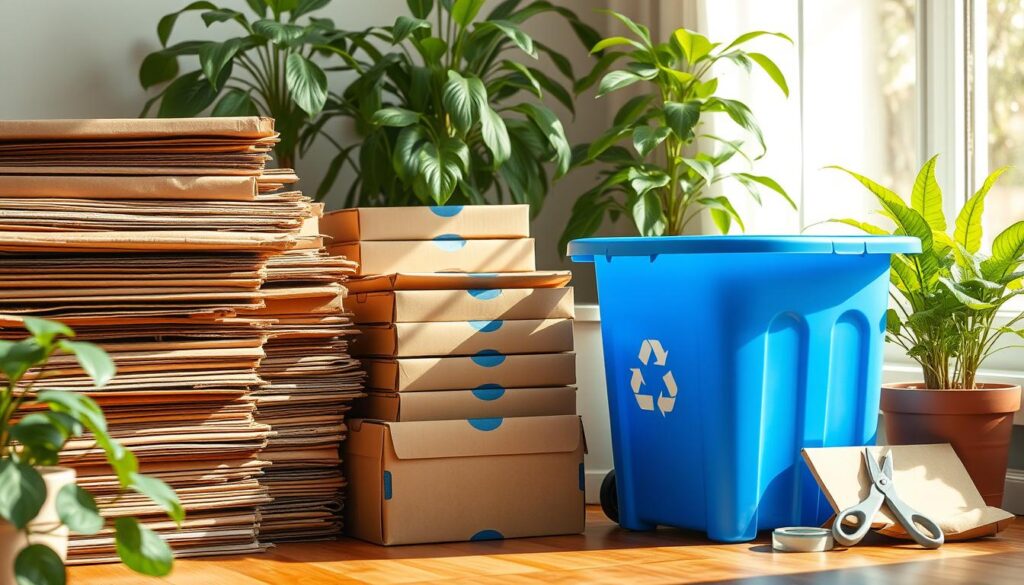
Separate cardboard, newspapers, magazines, office paper, and junk mail. Cardboard should be free of plastic, styrofoam, and excess tape before it goes in with the rest.
2. Keep It Clean and Dry
Wet or food-stained paper is one of the biggest contamination sources in the recycling stream. Clean off what you can, and skip anything soaked through with grease.
3. Skip the Shredder When Possible
Shredded paper is difficult for facilities to sort and process. If you must shred confidential documents, check whether your local program accepts it — and if so, bag it separately rather than tossing it in loose.
4. Store It Properly Between Pickups
Keep paper in a dry, ventilated space, and flatten cardboard boxes to save room and prevent them from getting crushed or wet.
| Paper Type | Prep Before Recycling |
|---|---|
| Cardboard | Remove plastic, styrofoam, and tape; flatten |
| Newspapers | Keep dry; remove plastic wrapping |
| Magazines | Remove plastic covers or inserts |
| Office paper | Remove staples and metal clips |
| Junk mail | Remove plastic windows and envelope liners |
Cardboard Box Recycling Guidelines
Cardboard box recycling has its own set of rules within the broader paper and cardboard recycling process:
- Flatten every box — it saves space and speeds up collection
- Remove plastic wrap, styrofoam inserts, and excessive tape
- Check pizza boxes and food packaging for grease stains
- Cut out and discard heavily soiled sections rather than tossing the whole box
- Keep cardboard dry — moisture weakens the fibers before they’re even reprocessed
💡 Tip: A dedicated cardboard cutter makes this step faster and safer than scissors or a box knife — CANARY Cardboard Cutter on Amazon.
Common Mistakes to Avoid
Watch out for:
Greasy pizza boxes, plastic bags mixed in with paper, and shredded paper loose in the bin are the three most common ways households unintentionally contaminate a recycling load.
| Mistake | Fix |
|---|---|
| Food-soiled or greasy items | Clean before recycling or discard the soiled section |
| Non-recyclable items in the bin | Check local guidelines before adding anything unfamiliar |
| Overloaded or compacted bins | Avoid overfilling; don’t compress items too tightly |
| Mixing paper types | Sort by type — different papers need different processing |
Special Considerations for Different Paper Products
Magazines and newspapers: Remove plastic wrappings or inserts first — adhesives and coatings can interfere with processing.
Office paper and confidential documents: Where possible, black out sensitive information with a marker instead of shredding. If you do shred, bag it separately and check whether your program accepts it at all.
Food packaging: Paper cups and pizza boxes are recyclable only when clean. Oil, grease, and food residue can contaminate an entire batch and lower the quality of the recycled material.
Reducing Paper Waste at Home
Recycling is only half the picture. Reducing how much paper you use in the first place cuts waste before it starts:
- Switch to digital billing and paperless statements
- Reuse or donate cardboard boxes instead of discarding them
- Ask retailers about their own packaging take-back programs
- Reuse gift bags and tissue paper, or choose plain paper wrap over foil-coated options
- Buy products made from recycled paper when you have the choice
Finding Local Recycling Centers and Programs
Start with your local government’s waste management page to confirm curbside rules and drop-off locations. Online directories like Earth911 and Recycle Now let you search by zip code for centers that accept paper and cardboard specifically.
Retailers can help too — office supply chains, grocery stores, and secondhand shops like Goodwill or Habitat ReStore often accept paper goods and boxes. For anything hazardous (electronics, batteries, paint), use a dedicated program like Call2Recycle rather than your regular paper and cardboard recycling bin.
FAQ
Can greasy pizza boxes be recycled?
Only the clean parts. Cut away any grease-stained sections and recycle the rest.
Should shredded paper go in the recycling bin?
Generally no — it’s hard for facilities to sort. Check local rules, and bag it separately if it’s accepted.
Does cardboard need to be flattened before recycling?
Yes. Flattened boxes save space, speed up collection, and process more efficiently at the facility.
Conclusion
Paper and cardboard recycling works — 68% of US households and businesses already prove that at scale. The parts that make it effective are simple but easy to skip: sort by type, keep everything clean and dry, flatten your cardboard, and know what your local program actually accepts. Get those habits right, and your paper and cardboard recycling efforts genuinely reduce landfill waste, save resources, and support a more circular economy.
Take Action: Start Recycling Smarter Today
Subscribe to our Newsletter – Receive expert tips, case studies, and exclusive content on sustainable technology and green materials
Related Articles
- What Items Can Be Recycled: A Complete Guide
- Is Styrofoam Recyclable? [2026 Update] Complete Guide + Local Drop-Off FinderIs
- Understanding Recycling Symbols: A Complete Guide to Plastic Numbers
- Recycling Symbol Numbers: Advanced Materials & Electronics – The Complete Guide
- How to Start Recycling at Home: Complete Beginner’s Guide for 2025