
⚡ Quick Answer: Water quality standards are legally enforceable limits, set by the U.S. Environmental Protection Agency (EPA), on the contaminants allowed in drinking water and in lakes, rivers, and coastal waters. In 2026, the EPA still limits PFOA and PFOS to 4 parts per trillion (ppt), has proposed an optional deadline extension to 2031, and is moving toward stricter lead rules starting in November 2027.
Table of Contents
Water quality standards protect our lakes, rivers, and tap water. The EPA sets them to make sure water is safe for drinking, swimming, and fishing. The Safe Drinking Water Act of 1974 gives the EPA the power to enforce these standards and keep tap water safe across the U.S.
Key Takeaways
- The EPA sets and enforces water quality standards to protect public health and the environment.
- The Safe Drinking Water Act is the legal authority for regulating public water supplies.
- Water quality standards limit dozens of contaminants in tap water, including germs, chemicals, and radioactive materials.
- In May 2026, the EPA proposed keeping the PFOA and PFOS limits at 4 ppt while letting qualifying systems apply for a deadline extension from 2029 to 2031. It also proposed rescinding the limits for four other PFAS.
- The Lead and Copper Rule Improvements lower the lead action level from 15 ppb to 10 ppb and require lead pipe replacement within 10 years.
- Public water systems must test regularly and send customers an annual water quality report.
- Bottled water is regulated separately by the FDA.
Understanding Water Quality Standards and Their Importance
Water quality standards set goals for water bodies and limit harmful contaminants. They keep water safe for drinking and healthy for the environment.
What Are Water Quality Standards?
Water quality standards are rules that keep our water clean. They define how much of a contaminant is allowed and which uses a water body must support, such as drinking, swimming, and wildlife habitat.
Water Quality Standards and Public Health
These standards limit harmful substances in our water. Without them, germs, heavy metals, and chemicals could reach our taps.
Water Quality Standards and Environmental Conservation
Water quality standards also keep waterways healthy for wildlife. They help preserve aquatic life and the ecosystems that depend on clean water.
The Safe Drinking Water Act: Foundation of Water Quality Standards
The Safe Drinking Water Act (SDWA) is the main law for drinking water safety in the US. The 93rd US Congress passed it on December 16, 1974. It lets the EPA set national standards that protect against both natural and man-made contaminants.
The SDWA covers public water systems across the US. It includes rules for source water protection, operator training, and funding for infrastructure improvements. It does not cover private wells, so those households are responsible for testing their own water.
The EPA’s regulated contaminants include Cryptosporidium, Giardia lamblia, Legionella, coliform bacteria, and enteric viruses. The Act also sets limits for lead in public water systems and defines “lead free” pipes.
2026 Updates to Water Quality Standards
Two areas have changed most in recent years: PFAS and lead.
PFAS (“forever chemicals”). In April 2024, the EPA finalized the first national drinking water standards for six PFAS. These were 4 ppt for PFOA and PFOS, and 10 ppt for PFHxS, PFNA, and HFPO-DA. A hazard index covered mixtures of PFHxS, PFNA, HFPO-DA, and PFBS. On May 18, 2026, the EPA proposed two changes:
- Compliance extension. The PFOA and PFOS limits would stay at 4 ppt. Qualifying systems could apply to move their deadline from April 26, 2029 to April 26, 2031. The extension would not be automatic.
- Rescission. The EPA proposed rescinding the standards for PFHxS, PFNA, HFPO-DA, and the hazard index mixtures. Its stated reason is procedural, not a finding that these chemicals are safe.
The public comment period closed on July 20, 2026. Check EPA.gov for whether these proposals have since been finalized.
Lead and Copper Rule Improvements (LCRI). The EPA finalized the LCRI in October 2024. It requires most water systems to replace lead service lines within 10 years and lowers the lead action level from 15 ppb to 10 ppb. Most systems do not have to meet the new requirements until November 2027. Some groups have challenged the rule in court, and the EPA has said it intends to defend it.https://www.youtube.com/watch?v=CGun64O1oG0
Key Highlights of Current Water Quality Standards
| Topic | Detail |
|---|---|
| PFOA and PFOS limit | 4 ppt each (finalized April 2024) |
| Proposed PFOA/PFOS deadline extension | April 2029 to April 2031 (May 2026 proposal) |
| Other PFAS (PFHxS, PFNA, HFPO-DA) | 10 ppt limits finalized in 2024; rescission proposed in 2026 |
| Lead action level | 10 ppb under the LCRI (most systems from November 2027) |
| Lead service line replacement | Within 10 years |
| Lead exceedance notification | Within 24 hours |
EPA’s Role in Enforcing Water Quality Standards
The EPA manages the nation’s water quality under the Clean Water Act and the Safe Drinking Water Act. It sets national standards and reviews state programs to protect public health and the environment.
Regulatory Authority and Responsibilities
Enforcement Mechanisms
The EPA can issue orders, impose penalties, and prosecute serious violators.
Compliance Monitoring
The EPA tracks water quality, reviews utility reports, and conducts inspections. This helps it find and fix violations quickly.
National Primary Drinking Water Regulations
The EPA creates criteria for pollutants, reviews state standards, and oversees programs nationwide.
The National Primary Drinking Water Regulations (NPDWRs) are the EPA’s enforceable limits for harmful substances in public water systems. They cover germs, chemicals, and radioactive materials, and they set treatment requirements.
| Contaminant Type | Regulated Contaminants |
|---|---|
| Inorganic Chemicals | Arsenic, Nitrate, Fluoride, Lead, Copper |
| Organic Chemicals | Atrazine, Benzene, Vinyl Chloride, PCBs |
| Microbiological | Total Coliforms, E. coli, Cryptosporidium, Giardia lamblia |
| Radionuclides | Radon, Uranium, Radium |
| Disinfectants and Byproducts | Chlorine, Chloramine, Chlorine Dioxide, Trihalomethanes, Haloacetic Acids |
| PFAS | PFOA and PFOS (4 ppt each); standards for four other PFAS proposed for rescission |
Water systems must test often. If they find too much of a contaminant, they must fix the problem, report it, and keep records.
Contaminant Monitoring Under Water Quality Standards
Water systems check for germs, chemicals, and radiation. How often they test depends on the contaminant and the size of the system.
Common Water Contaminants
- Pesticides
- Volatile Organic Compounds (VOCs)
- Pharmaceuticals
- Polycyclic Aromatic Hydrocarbons (PAHs)
- Polychlorinated Biphenyls (PCBs)
- Per- and Polyfluoroalkyl Substances (PFAS)
- Semi-Volatile Organic Compounds (SVOCs)
- Heavy Metals
- Nutrients
Testing Methods and Frequency
Systems test for chemicals, germs, and radiation. Testing frequency depends on the system’s size and the rules it follows.
Treatment Requirements
If contaminants are found, systems must treat the water with filters, disinfectants, or other chemicals. The treatment depends on the type and amount of contamination.
State and Tribal Water Quality Standards Programs
In the U.S., states and tribes can set their own water quality standards. The EPA reviews and approves them, and they must be consistent with federal requirements. Some tribes are still working toward program approval.
Water Quality Standards for Different Water Bodies
Standards vary by water body type and use.
Lakes and Reservoirs
Lakes and reservoirs need standards for nutrients and clarity. They are at risk of eutrophication, which harms algae and oxygen levels.
Rivers and Streams
Rivers and streams need standards for flow, temperature, and aquatic life. Many species are sensitive to temperature.
Coastal Waters
Coastal waters need standards for salinity, bacteria, and marine life. These standards support swimming, fishing, and marine habitats.
Water Treatment Processes That Meet Water Quality Standards
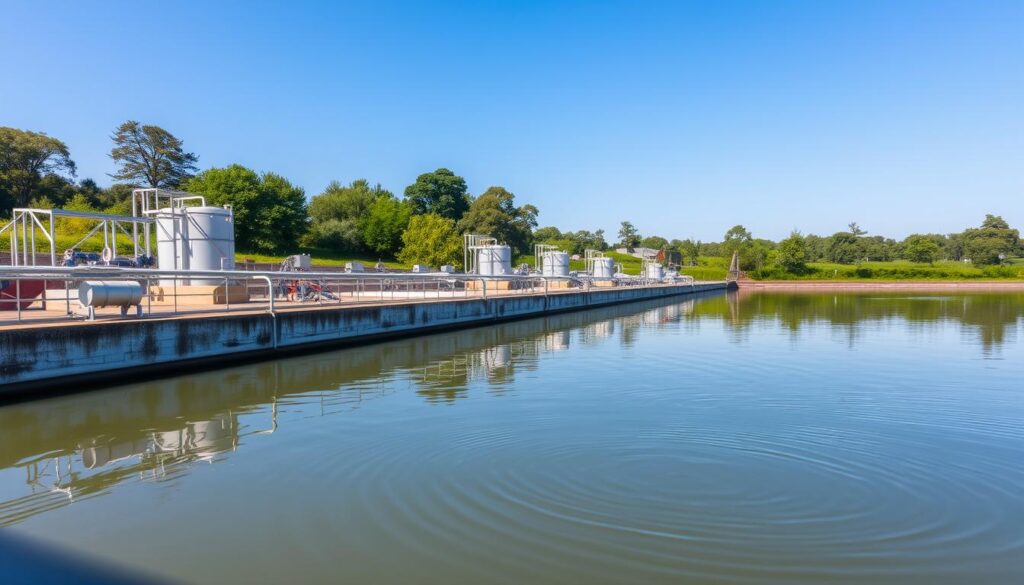
Water treatment removes harmful substances so water meets EPA standards. The main steps are:
- Coagulation: chemicals bind dirt and particles together.
- Flocculation: gentle mixing forms larger clumps called flocs.
- Sedimentation: the flocs settle out.
- Filtration: filters remove remaining contaminants.
- Disinfection: chemicals or UV light kill germs.
Treatment varies by source. Lake water usually needs more treatment than groundwater. Regular tests for temperature, pH, and bacteria confirm the water meets the standards.
Monitoring and Reporting Requirements for Water Quality Standards
Public water systems must test often for bacteria, chemicals, and radioactive materials. The frequency depends on the system’s size and water source.
Water Quality Reports
Every year, community water systems must send customers a Consumer Confidence Report (CCR). It lists any contaminants found, possible health risks, and whether the water meets standards. Many reports are also available online.
Public Notification Systems
If a system fails to meet water quality standards, it must notify customers right away. The notice explains the problem, the health risks, and the fix. Under the LCRI, systems must notify the public within 24 hours of a lead exceedance.
Conclusion
Water quality standards are essential for managing and protecting our water. In 2026, PFAS and lead are the main areas to watch, so check your utility’s latest Consumer Confidence Report to see how your water measures up.
Take Action Today
Start your plant-based water purification journey:
- Subscribe to our Newsletter – Get expert tips on sustainable water treatment, real-world case studies, and practical solutions to improve water quality in your home and community.