

Reading time: 5 minutes
⚡ Quick Answer: To reduce carbon footprint at home, start with a home energy audit, switch to LED lighting and Energy Star appliances, install a smart thermostat, and consider a heat pump or solar panels. Pair these energy-efficient home upgrades with water conservation, composting, and fewer car trips to cut your household emissions significantly within a year.
Table of Contents
The average American produces about 16 tons of CO2 a year — four times the global average. The good news: most of that footprint comes from your house, your car, and your kitchen, which means you have real control over it. This guide walks through practical, low-cost ways to reduce carbon footprint at home, room by room.
Understanding Your Home’s Carbon Footprint
Before you can reduce carbon footprint at home, it helps to know where your emissions actually come from. Four areas matter most: energy use, transportation, waste, and everyday consumption.
How to Calculate Your Carbon Footprint
Free tools like the EPA’s Household Carbon Footprint Calculator estimate your emissions based on your energy bills, driving habits, and shopping patterns. Running the numbers first makes it easier to see which changes will move the needle most.
Key Sources of Household Emissions
- Energy use — heating, cooling, and powering your home
- Transportation — fuel for cars, flights, and public transport
- Waste — food scraps and yard trimmings that release methane
- Consumption — the goods and services you buy and discard
Energy-Efficient Home Upgrades to Reduce Carbon Footprint at Home
Energy-efficient home upgrades are usually the fastest way to reduce carbon footprint at home, since heating, cooling, and lighting make up such a large share of household emissions.
Smart Thermostats
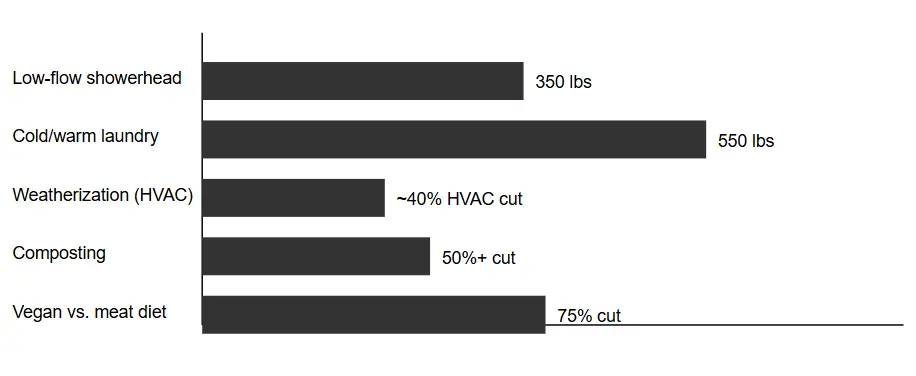
A programmable or smart thermostat can cut HVAC energy use by up to 40%, and sealing ducts adds further savings — together good for roughly a 5% cut in home CO2 emissions.
LED Lighting
LED bulbs use about 75% less energy than incandescent bulbs and last 25 times longer. It’s one of the cheapest energy-efficient home upgrades you can make this weekend.
Energy Star Appliances
Choosing Energy Star-certified appliances is a simple, ongoing way to reduce carbon footprint at home every time you do laundry or run the dishwasher.
| Appliance | Share of Home Energy Use | Annual Cost Savings |
|---|---|---|
| Refrigerator | 3% | $200–$1,000 |
| Washing Machine | 14% | $50–$200 |
| Dishwasher | 2% | $30–$100 |
Renewable Energy Solutions
Pairing efficiency upgrades with renewable energy solutions is how you get from “using less” to genuinely low-carbon living.
Solar Panels
Government incentives have made rooftop solar far more affordable, and in many states you can also buy 50–100% renewable electricity directly from your utility.
Heat Pumps
Heat pumps move heat rather than generating it, reaching up to 300% efficiency compared to traditional furnaces — one of the most effective renewable energy solutions for existing homes.
Water Conservation Tips to Reduce Carbon Footprint at Home
Heating water takes energy, so saving water is another direct way to reduce carbon footprint at home.
| Water-Saving Technique | Annual CO2 Savings |
|---|---|
| Low-flow showerheads | 350 lbs |
| Cold/warm water laundry (2 loads/week) | 550 lbs |
| Drip irrigation with smart controllers | $10–$50/month saved |
Smart Waste Management
Sustainable living practices at home almost always include better waste habits, since organic waste in landfills releases methane, a potent greenhouse gas.
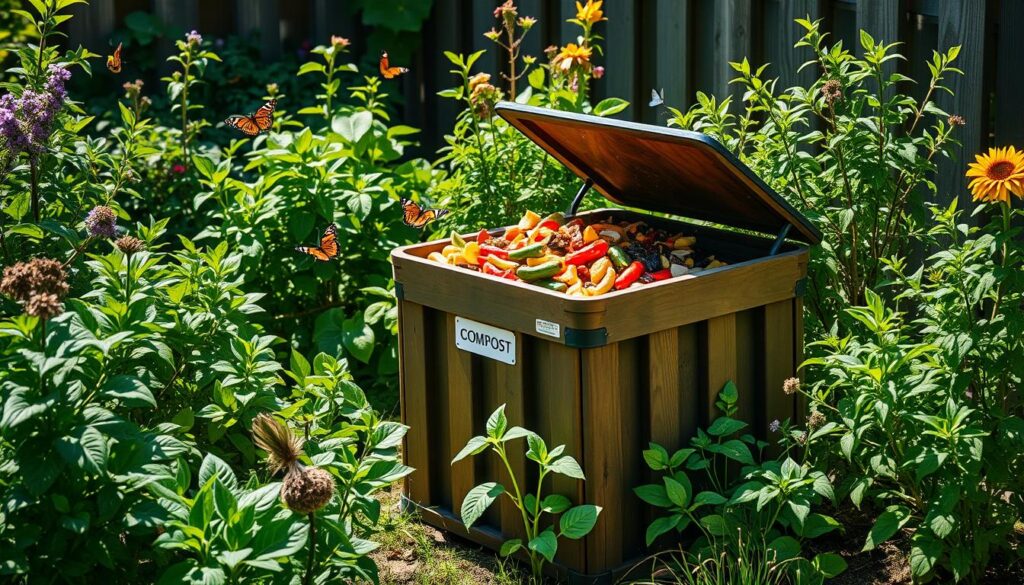
- Composting — cuts emissions from organic waste by over 50%
- Recycling — sorting paper, plastic, glass, and metal keeps material out of landfills
- Zero-waste kitchen habits — meal planning, freezing leftovers, and buying in bulk
Eco-Friendly Transportation Choices
The average car emits about five tons of CO2 a year, so transportation choices matter almost as much as anything happening inside the house. Carpooling, public transit, biking, and keeping tires properly inflated all help. When it’s time for a new car, hybrids and EVs are the lowest-emission options available.
Sustainable Food and Shopping Habits
What you eat is part of your home’s footprint too. Meat-eaters produce roughly 10kg of greenhouse gases a day, compared to about 2.5kg for vegans — a 75% reduction. Buying local, in-season food and cutting food waste are two more sustainable living practices that add up fast.
Carbon Savings at a Glance
Here’s a quick visual comparison of the annual CO2 savings from a few of the changes above:
FAQ: Reduce Carbon Footprint at Home
What is the fastest way to reduce carbon footprint at home?
Switching to LED bulbs and installing a smart thermostat are the fastest, cheapest ways to reduce carbon footprint at home, often paying for themselves within a year.
How much can I actually lower my home’s emissions?
Combining energy-efficient home upgrades, water conservation, and renewable energy solutions can realistically cut a household’s footprint by 30–50% over a few years.
Do solar panels really help reduce carbon footprint at home?
Yes. Solar panels replace grid electricity — often generated from fossil fuels — with clean power, making them one of the highest-impact renewable energy solutions for homeowners.
Is composting worth it if I live in an apartment?
Yes — countertop or community composting programs still divert methane-producing waste from landfills, so it remains one of the easiest sustainable living practices for renters.
Conclusion
You don’t need to overhaul your entire life to reduce carbon footprint at home. Start with one or two energy-efficient home upgrades, add water conservation and composting, and layer in renewable energy solutions as your budget allows. Small, consistent changes to how you power, heat, and stock your home add up to a meaningfully smaller footprint — and lower bills along the way.
Take Action Today
- Subscribe to our Newsletter – Receive expert tips, case studies, and exclusive content on sustainable technology and green materials
Related Articles
- Eco-Friendly Lifestyle Changes: 15 Simple Habits That Save Money & the Planet (2026 Guide)
- 25 Eco-Friendly Living Tips for 2026: Save Money & The Planet
- Eco-Friendly Living Ideas: 7 Actionable Steps to Reduce Emissions & Protect the Planet (2025 Guide)
- The Science of Composting Toilets: Aerobic Decomposition & System Design