
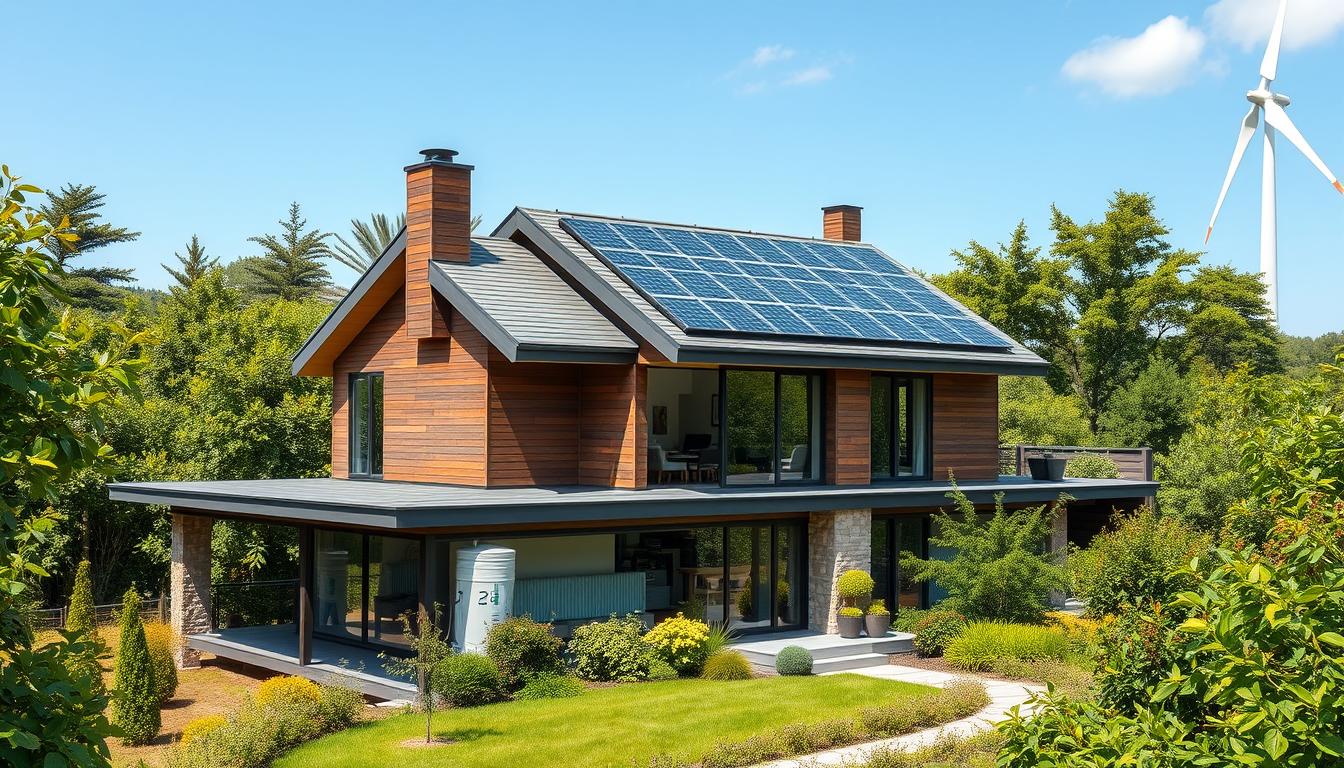
Sustainable home design and eco-friendly living are key for today’s homeowners. By using energy-efficient living strategies, homes can become both efficient and green. This guide offers 16 practical tips to help homeowners cut down on utility bills, reduce their carbon footprint, and make their homes cozy and energy-smart.
Table of Contents
Key Takeaways
- Incorporate smart home automation to manage energy use efficiently
- Optimize HVAC systems and invest in programmable thermostats
- Utilize LED lighting and natural daylight integration for energy savings
- Prioritize energy-efficient appliances and power management strategies
- Enhance home insulation and climate control for improved comfort
Understanding Smart Home Energy Management
Smart home technology is changing how we use energy at home. Energy conservation methods and green building techniques are now easier to use. Thanks to smart home automation, we can monitor and control our energy use easily.
Benefits of Smart Home Automation
- Remote control of appliances via smartphones or voice commands
- Detailed monitoring of energy usage patterns
- Ability to set custom schedules for devices and systems
- Automated adjustments to maintain optimal energy efficiency
- Reduction in overall energy consumption and lower utility bills
Key Components of Energy-Efficient Systems
At the heart of a smart home’s low-carbon footprint are various devices and technologies. These include smart thermostats, intelligent lighting, energy-efficient appliances, and monitoring solutions. Homeowners can manage their energy use and make sustainable choices with these components.
Real-Time Energy Monitoring Solutions
Smart meters and monitoring tools are key in managing home energy. They give detailed, real-time data on energy use. This helps families spot high usage times and cut down energy use. With this insight, they can adopt energy conservation methods and green building techniques for a greener lifestyle.
| Smart Home Energy-Saving Devices | Key Features | Energy-Saving Potential |
|---|---|---|
| Smart Thermostat | Automated temperature adjustments, remote control, and learning capabilities | Up to 30% reduction in HVAC energy consumption |
| Energy-Efficient Refrigerator | Intelligent temperature regulation, door seals, and energy-efficient compressors | Up to 25% reduction in refrigerator energy usage |
| Smart Dishwasher | Leak detection, efficient drying cycles, and water usage optimization | Up to 20% reduction in dishwasher energy and water consumption |
Smart Thermostats and HVAC Optimization
Starting to make homes more energy efficient begins with better heating, ventilation, and air conditioning (HVAC) systems. Smart thermostats are key, offering features for passive cooling and heating. They also help with detailed energy audits for homes aiming for net-zero.
ENERGY STAR certified smart thermostats, like Nest and ecobee, use smart tech to adjust temperatures. They do this based on who’s home, the weather, and what you like. These devices learn your habits and set temperatures just right, saving energy.
- Smart thermostats can cut energy bills by 10-15% by managing heat and cool well.
- They use smart learning to adjust energy use based on how you live.
- Remote control lets you manage energy even when you’re not home.
- They send alerts for HVAC maintenance, keeping systems running smoothly.
Adding smart thermostats to HVAC systems brings passive cooling and heating benefits. It also gives insights from energy audits. This approach is key for homes that aim to use little to no energy, saving money and the planet.
The U.S. Department of Energy suggests keeping thermostats at 68-70°F when you’re up. Lower them by 7-10°F when you’re sleeping or out. Smart thermostats can do this automatically, keeping your home comfy and saving energy all day.
Intelligent Lighting Systems and Controls
Energy-efficient living often means using less energy. Smart LED lights are key in this effort. They cut down energy use and lower bills. Plus, they’re stylish, affordable, and last longer than old bulbs.
With voice-controlled smart lighting, managing your home’s lights is easy. You can use timers, motion sensors, and dimmers. This way, lights adjust automatically, saving energy. Smart lights also boost home security, making your home safer and more energy-efficient.
LED Technology and Energy Savings
Lighting uses 15%-20% of a building’s energy, as the U.S. Energy Information Administration found. New codes, like IECC 2021 and ASHRAE 90.1-2022, aim to save energy. They require better lighting controls and sensors, helping buildings use less power.
Motion Sensors and Automated Controls
A study by the Pacific Northwest National Laboratory found smart lighting saves 29% of energy. The global lighting control system market is expected to grow to $29.8 billion by 2030. This shows more people are choosing energy-saving lighting solutions.
Natural Light Integration
In 2022, lighting used 213 billion kilowatt hours of electricity, 5% of America’s energy. Cornell University found natural light reduces eye strain and headaches. It’s vital for well-being and productivity indoors.
Energy-Efficient Living Strategies for Modern Homes
Homeowners today want to live in a way that’s good for the planet. They look for ways to use less energy and save money. Modern homes can be greener and cheaper to run with the right strategies.
Using energy-efficient appliances can cut down electricity bills by up to 20%. Solar-powered devices like phone chargers and lights use the sun’s energy. This makes homes more sustainable.
Insulation and sealing air leaks keep homes at a steady temperature. This means you don’t need to heat or cool as much. Keeping your HVAC systems in good shape also helps save energy and money.
- Energy-efficient windows, like double-glazed ones, help keep heat in or out. This means you use less energy.
- Insulating walls, roofs, and floors keeps your home at a stable temperature. This reduces the need for heating and cooling.
- Using weather stripping, caulking, and preventing thermal bridging helps seal your home. This stops energy from escaping and makes your home more efficient.
By using these sustainable home design and eco-friendly lifestyle tips, homeowners can live greener. They also save on utility bills.
Smart Appliances and Power Management
Smart appliances are changing the game for energy-saving homes. They use advanced tech to help us live more sustainably. This leads to homes that use almost no energy at all.
Energy Star Certified Devices
Energy Star appliances are top-notch for saving energy and money. They use less power but still work great. Buying these appliances means you’re helping the planet and saving on bills.
Standby Power Reduction
Devices that use power even when turned off waste a lot of energy. Smart plugs and power strips help stop this. They let you cut off power to devices that aren’t being used.
Smart Scheduling Features
Smart appliances like fridges and ovens can be set to run when it’s cheapest. This saves you money and energy. Plus, you can control them from anywhere, making sure they’re always used wisely.
| Feature | Benefit |
|---|---|
| Energy Star Certification | Reduced electricity bills and environmental impact |
| Standby Power Reduction | Preventing inactive appliances from consuming unnecessary energy |
| Smart Scheduling | Running appliances during off-peak hours for cost savings |
Using smart appliances and managing power well is a big step towards saving energy. These techs help us live in a greener, more efficient way. They’re key to a better future.
Home Insulation and Climate Control
Insulation and sealing leaks in homes are key to saving energy and keeping temperatures steady. Insulating walls, floors, and attics helps block drafts. Sealing gaps around doors and windows also helps. This makes homes more energy-efficient and saves money on bills.
Energy-saving landscaping, like trees, can cut heating and cooling costs by 25%. Double glazing on windows and doors adds an extra layer of insulation. This makes homes more comfortable and energy-efficient.
Using passive cooling and heating, energy audits, and green building techniques helps control climate and save energy. Homeowners can make their homes more comfortable and energy-efficient by insulating and sealing properly.
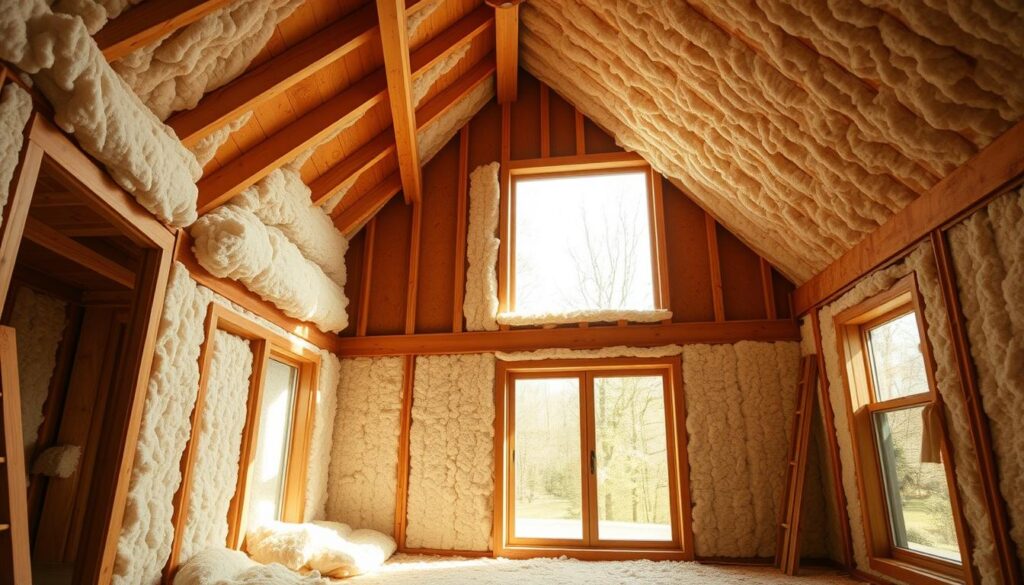
The R-value measures insulation’s heat resistance. The higher the R-value, the better it keeps heat out. Insulation thickness, material, and installation quality all affect a home’s R-value and energy efficiency.
Adding smart home tech like programmable thermostats and energy-efficient lights can save more energy. A holistic approach to energy management makes homes more sustainable and comfortable. It also reduces environmental impact.
Renewable Energy Integration
Homeowners are now looking to cut their carbon footprint and live more sustainably. They’re turning to solar power systems as a key solution. These systems help reduce reliance on traditional energy and support a greener future.
Solar Power Solutions
Solar-powered devices for homes include chargers, lights, and kitchen appliances. They use the sun’s energy to make clean electricity. This cuts down on energy bills and environmental harm.
Energy Storage Systems
Energy storage systems work with solar power to store extra energy. This is useful during peak times or when the power goes out. It helps manage energy better and might even let homeowners sell extra energy back to the grid.
Smart Grid Connectivity
Linking solar power with smart grid tech makes energy use more efficient. It helps move towards a net-zero future. Homes and communities can run on renewable energy, making our energy network better and greener.
| Renewable Energy Source | Average Cost | Efficiency and Benefits |
|---|---|---|
| Solar PV Systems | $3 per watt installed | Can meet a significant portion of a home’s electricity needs |
| Small Wind Energy Systems | $5 per 120 kilowatts | Ideal for areas with consistent wind patterns |
| Geothermal Heat Pumps | 2-3 times more efficient than air source heat pumps | Can recoup additional costs through energy savings in 10-15 years |
| Solar Water Heaters | $5,000 – $7,000 to install | Can meet 50% of a family of four’s hot water needs |
Water Conservation and Smart Irrigation
Water conservation is key in sustainable home design and living green. The average American uses about 82 gallons of water daily at home. This shows we need better ways to manage water. Homeowners can use several methods to cut down water use and help the planet.
Installing a rainwater harvesting system is a smart move. These systems collect and store rainwater, cutting down water use by 35% to 40%. The saved rainwater can be used for things like flushing toilets and washing cars. This reduces the need for municipal water.
Smart irrigation systems also help save water. They use weather data and soil moisture sensors to water plants just right. This means less water is wasted. Adding native plants that need less water makes outdoor spaces sustainable and low-maintenance.
Smart home appliances are also important for saving water. Energy-efficient dishwashers and washing machines use less water. Some models can save up to 20% of indoor water compared to older ones.
By focusing on water conservation, homeowners can lower their environmental impact and save money on bills. New technologies and green practices make sustainable living easier than ever.
| Water Conservation Strategies | Potential Water Savings |
|---|---|
| Rainwater Harvesting System | 35% – 40% reduction in household water usage |
| Smart Irrigation Systems | Optimized watering schedules to minimize water waste |
| Energy-Efficient Appliances | Up to 20% reduction in indoor water usage |
| Climate-Appropriate Landscaping | Less than half the water of traditional landscapes |
Home Energy Monitoring and Analytics
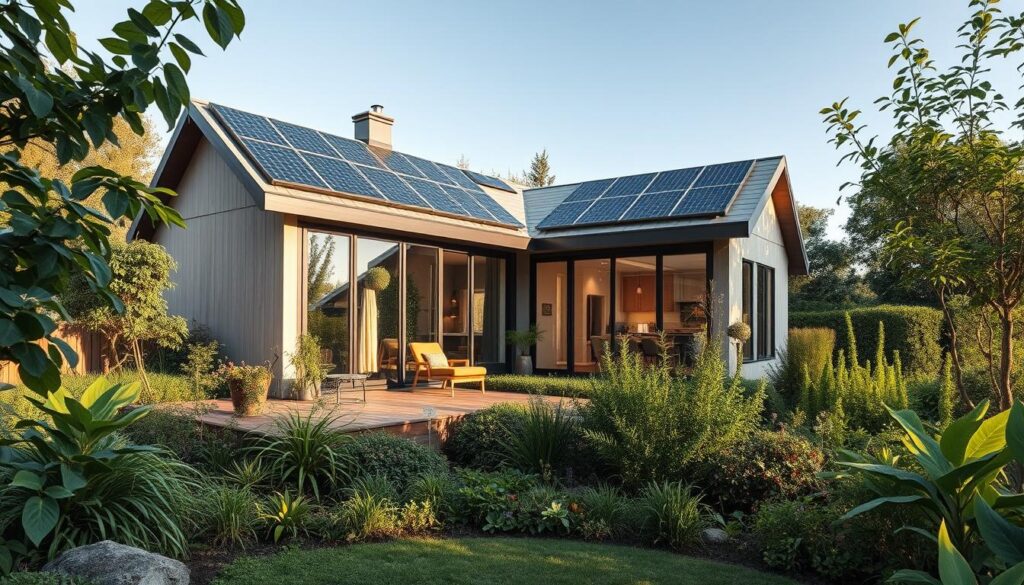
Homeowners are now focusing more on saving energy and cutting down on carbon emissions. Tools like the Department of Energy’s Home Energy Saver help track energy use in real-time. They show which appliances use the most power.
These tools give homeowners a clear view of their energy habits. They offer tips to use less energy, helping homeowners make better choices.
Usage Tracking Tools
Smart meters are key in showing how much energy is used at home. They help find out when energy use is highest. This lets homeowners save money by using less energy during these times.
These tools also show how much money can be saved by using less energy. This encourages people to use energy more wisely and adopt green practices.
Performance Optimization Tips
- Identify the most energy-intensive appliances and make informed decisions about their usage
- Implement smart scheduling features to optimize the operation of devices and systems
- Leverage motion sensors and automated controls to enhance the efficiency of lighting and HVAC systems
- Integrate renewable energy sources, such as solar panels, to reduce reliance on grid-supplied electricity
Cost Saving Analysis
Energy audits and cost-saving analysis help homeowners see the financial benefits of saving energy. By knowing how much money they can save, they are more likely to adopt green practices. This helps reduce their carbon footprint.
| Energy Monitoring Tool | Key Features | Potential Cost Savings |
|---|---|---|
| inepro Metering Electricity Meters | Real-time energy usage tracking, smart scheduling, AI-powered analytics | Up to 30% reduction in energy costs |
| Bull Dog Security Services Smart Home Products | Integrated energy monitoring, automated controls, security features | Improved energy efficiency and home safety |
Conclusion
Using smart home tech can save a lot of energy and help the planet. Smart thermostats, lights, and renewable energy are key. They make homes more eco-friendly and cut down on bills.
Smart home tech keeps getting better, promising more energy savings and green homes. As we adopt these eco-friendly ways, our homes will use less energy. This move towards a greener future is exciting.
Smart homes help us save money and help the environment. They make our homes more efficient and our community better. By using these techs, we can live more sustainably and save money too.
Take Action Today
- Subscribe to our Newsletter – Receive expert tips, case studies, and exclusive content on sustainable technology and green materials
Related Articles:
- Eco-Friendly Lifestyle Changes: 15 Simple Habits That Save Money & the Planet (2026 Guide)
- 25 Eco-Friendly Living Tips for 2026: Save Money & The Planet
- Eco-Friendly Living Ideas: 7 Actionable Steps to Reduce Emissions & Protect the Planet (2025 Guide)
- The Science of Composting Toilets: Aerobic Decomposition & System Design