
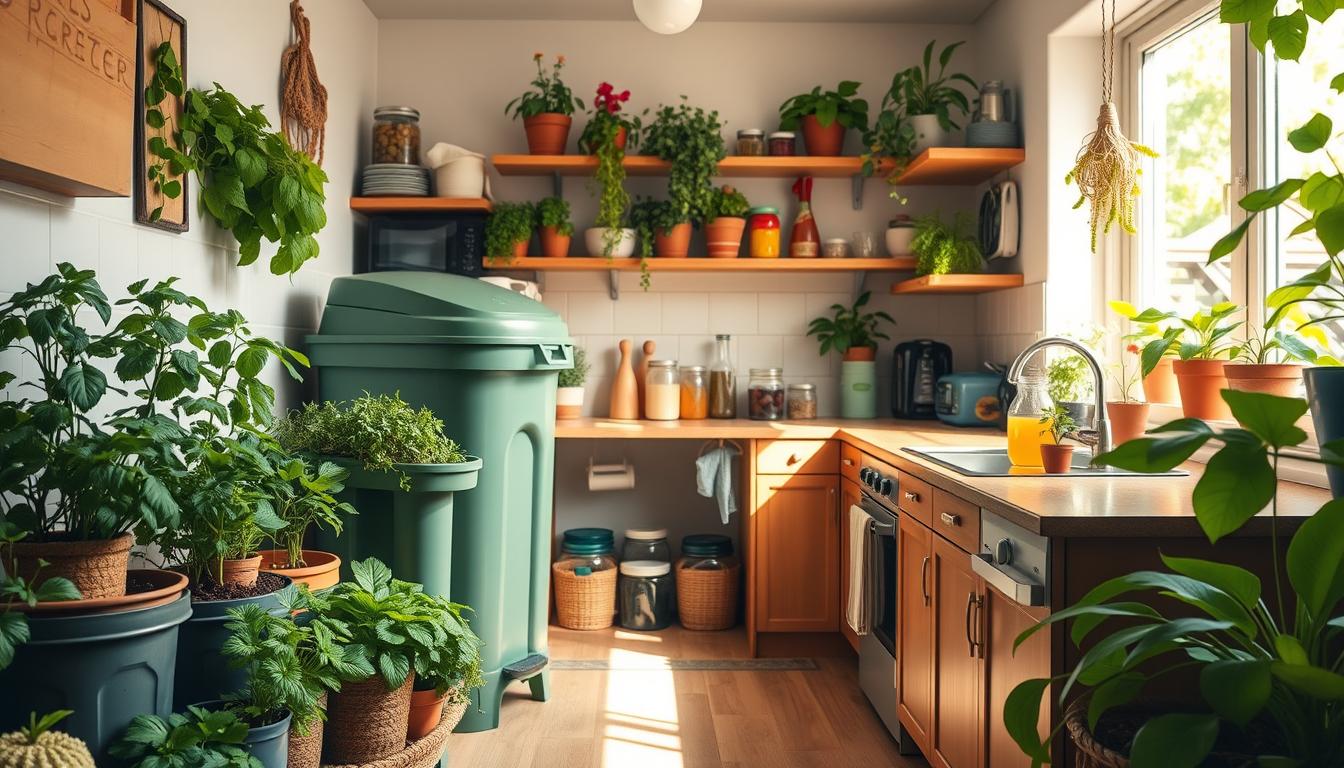
Sustainable household practices are key to cutting down global greenhouse gas emissions and environmental harm. Every decision in a home counts, from how much energy and food we use to our water and waste management. By making our homes more sustainable, we can lessen our carbon footprint and help the planet for generations to come. This guide offers simple steps and strategies to make your home more eco-friendly.
Table of Contents
Key Takeaways
- Sustainable household practices can significantly reduce one’s carbon footprint.
- Adopting eco-friendly living habits benefits the environment and saves money in the long run.
- Small changes, such as using reusable items and conserving energy and water, can have a big impact.
- Sustainable living promotes social equality and supports healthy, diverse ecosystems.
- Companies are increasingly embracing environmentally friendly and ethical practices due to rising consumer demand.
Understanding Sustainable Living Basics
Sustainable living means making choices that help the Earth. It’s about using less energy and water, choosing renewable materials, and making less waste. By learning about sustainable living, we can make choices that help the planet.
Defining Sustainability in the Home
Sustainable living at home means living in harmony with nature. It’s about using resources wisely, reducing waste, and lowering our environmental impact. Simple steps like using energy-efficient appliances and water-saving fixtures can make a big difference.
Environmental Impact of Household Choices
Our daily choices affect the environment a lot. From the energy we use to the products we buy, our actions contribute to pollution and resource depletion. Knowing how our choices impact the planet helps us make better decisions for a greener future.
Benefits of Sustainable Living
- Reduced Carbon Footprint: Using energy-efficient appliances and renewable energy can lower our carbon footprint. This helps fight climate change.
- Lower Utility Bills: Sustainable practices like weatherizing your home and saving water can save money. They’re good for the planet and your wallet.
- Improved Health: Choosing non-toxic cleaning products and reducing chemical exposure can improve our health. It makes our living spaces healthier.
- Positive Impact on the Planet: Sustainable living helps protect natural resources and ecosystems. It ensures a better future for all.
Sustainable living is about reducing our environmental impact and living more eco-friendly. By understanding sustainability and its benefits, we can make choices that help our planet.
Essential Sustainable Household Practices
Sustainable living is more than a trend. It’s about saving resources and making the future healthier for everyone. By adopting key sustainable practices, homes can lessen their environmental impact. This can also save money and improve health.
Conserving energy and water are key to sustainable living. Start by doing an energy audit and switching to efficient appliances. Fixing leaks and taking shorter showers can also help. Plus, using cold water for laundry is a good idea.
Planning meals sustainably means cutting down on food waste. Choose local, plant-based foods when you can. This helps the planet and supports local farmers.
Reducing waste and recycling are all about the three Rs: reduce, reuse, recycle. Use less plastic, find new uses for items, and recycle correctly. This keeps waste out of landfills.
Choosing eco-friendly cleaning products is another step. Swap harsh chemicals for natural ones like vinegar and baking soda. Look for brands that care about the environment.
For your garden, pick native plants and use mulch and compost. These choices help wildlife and keep your garden healthy. Living sustainably means thinking about the planet in all you do.
By following these practices, you can make a big difference. You’ll help reduce your environmental footprint and support a greener future.
| Sustainable Practice | Key Benefits |
|---|---|
| Energy Conservation | Reduced energy bills, lower greenhouse gas emissions |
| Water Conservation | Decreased water usage, cost savings on utility bills |
| Waste Reduction | Less landfill waste, decreased environmental impact |
| Sustainable Consumption | Support for eco-friendly companies, reduced carbon footprint |
Eliminating Single-Use Items
Single-use plastics harm our environment a lot. They pollute oceans, with 75-199 million tons of plastic waste already there. Every year, 9-14 tons more waste enters the oceans. By 2040, this could grow to 23-37 million tons annually.
Plastics are the biggest problem in marine waste, making up at least 85% of it. They are harmful and last a long time.
Reusable Alternatives for Daily Use
Switching to reusable items can greatly reduce waste. Using a paper bag four to eight times is better than a plastic one. UNEP suggests choosing reusable items for their benefits.
- Replace disposable bags, bottles, cups, and food packaging with reusable ones.
- Look for durable, lightweight, and eco-friendly reusable products.
- Think about local needs and social situations when getting rid of single-use plastics.
Smart Shopping Solutions
Using reusable items for shopping can cut down on waste. Bring your own bags, containers, and bottles for groceries and bulk items.
Cost Benefits of Reusable Items
Reusable items might cost more at first, but they save money and the planet in the long run. The Department of the Interior wants to stop single-use plastics by 2032. They aim to recycle or compost 75% of waste by 2030.
Experts say we should choose reusable items and use less to protect our planet.
| Item | Single-Use Cost | Reusable Cost | Savings |
|---|---|---|---|
| Water Bottle | $1 per bottle | $15 for a reusable bottle | $145 over 5 years |
| Coffee Cup | $0.25 per cup | $10 for a reusable cup | $37.50 over 1 year |
| Shopping Bag | $0.05 per bag | $1 for a reusable bag | $9 over 1 year |
Smart Energy Conservation Strategies
Using sustainable practices at home can save a lot of energy and help the environment. Key strategies include using energy-efficient LED lighting, installing smart thermostats, and adding solar panels.
LED bulbs use much less energy than old bulbs and last much longer. They are a smart and green choice. Smart thermostats adjust heating and cooling based on when you’re home. This saves energy and can cut your bills by up to £150 a year.
Solar panels are a big step towards saving energy. They make clean power, cutting down on energy costs by 50-70%. They also lower your carbon footprint. These steps are good for the planet and save you money in the long run.
Using energy-saving appliances can also help a lot. They can use up to 30% less energy. Sealing leaks, better insulation, and smart power strips can also save energy.
By using these smart ways to save energy, you can lower your bills, help the planet, and live more sustainably.

Water Conservation Methods
Water conservation is key for sustainable living. Homeowners can lessen their environmental footprint and save resources by using water wisely. There are many ways to cut down on water waste at home.
Efficient Water Usage Tips
Small changes can lead to big water savings. Fixing leaks fast, taking shorter showers, and using a broom for outdoor cleaning help a lot. Even small actions like saving water while brushing teeth or shaving can save gallons.
Grey Water Systems
Grey water systems are a clever way to reuse water from sinks, showers, and washing machines. They help water your garden and lawn without using drinking water. This way, you support your plants and save water.
Low-Flow Fixture Solutions
Choosing low-flow fixtures like dual-flush toilets and water-efficient showerheads is smart. They use less water but still work great. These fixtures are good for the planet and your wallet.
Using these methods, homeowners can greatly reduce their water use. Simple changes and smart upgrades can make a big difference. Together, we can make our homes more water-efficient and sustainable.
Waste Reduction and Management
Sustainable living means reducing and managing waste well. This includes recycling and composting organic waste. It’s key to cut down on landfill waste. Food waste is a big problem because it breaks down in landfills, releasing methane, a harmful gas.
Small actions can help a lot. Check your fridge before you shop, make lists, and use food scraps again. Adding composting and recycling to your daily routine helps a lot too.
- The average American generates about 4.9 pounds of waste every day, according to municipal solid waste data collected by the EPA.
- Recycling and composting can divert up to 25% of household waste from landfills.
- Plastics labeled with a 1 or 2 are often accepted for recycling, as they have the highest value resins.
- Composting food scraps can produce nutrient-rich soil for gardens and reduce the need for additional water.
| Waste Reduction Strategies | Benefits |
|---|---|
| Avoiding single-use plastics | Reduces plastic waste and protects the environment |
| Composting food scraps | Diverts organic waste from landfills and creates nutrient-rich soil |
| Using reusable bags and containers | Minimizes single-use paper and plastic consumption |
| Purchasing secondhand items | Supports the circular economy and diverts waste from landfills |
By using sustainable waste management, homes can lessen their environmental footprint. Recycling and composting are key. Every effort towards reducing waste helps us move towards a greener future.
Creating an Eco-Friendly Kitchen
The kitchen is key in living sustainably. It’s about cutting down on food waste, cooking green, and using eco-friendly storage. Simple steps can make a big difference, making your kitchen greener and your life better.
Food Waste Prevention
Food waste harms the environment and wastes resources. Start by planning meals better. This helps avoid buying too much food and reduces waste.
Composting kitchen scraps is also smart. It turns waste into soil for your garden.
Sustainable Cooking Practices
Choosing the right cooking methods helps the planet. Use energy-efficient options like induction cooktops. They use 84% of the energy they make, unlike old stoves.
Choosing eco-friendly kitchen appliances with the Energy Star label is wise. They cut down electricity use by up to 50%, saving energy.
Green Storage Solutions
Using less single-use items is important. Switch to reusable containers and wraps made of glass, silicone, or eco-friendly materials. These green storage solutions help reduce waste and make your kitchen cleaner and healthier.
Adopting these eco-friendly habits in your kitchen saves money, helps the planet, and makes your home healthier. A sustainable kitchen is good for everyone, now and in the future.
Natural Cleaning Solutions
Looking for a greener home? Natural cleaning solutions are the way to go. Many store-bought cleaners are bad for the planet and our health. But, you can make your own non-toxic household cleaners with simple stuff.
Vinegar and water is a great combo for cleaning. It works well on many surfaces, like countertops and windows. Baking soda is also handy for getting rid of tough stains and smells.
Want your home to smell nice? Use citrus peels to make your own natural cleaners. The oils in citrus fruits can cut through grease and leave a nice scent. You can also try DIY cleaning solutions with essential oils, castile soap, and more.
Choosing eco-friendly cleaning products helps your family and the planet. These natural cleaners are often cheaper than store-bought ones. They’re a smart choice for living green.
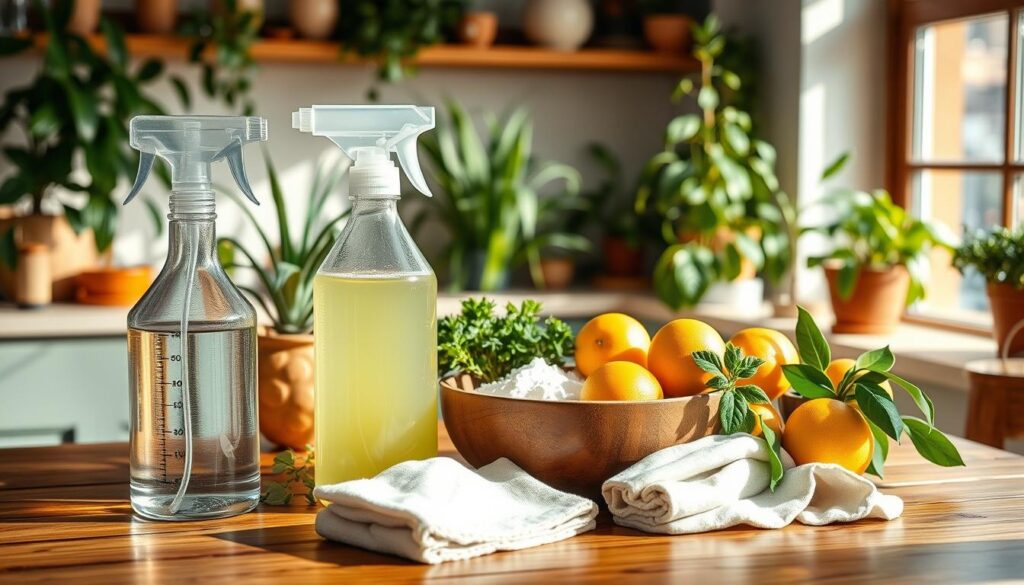
Using natural cleaning solutions does more than just clean your home. It helps make the air, water, and soil cleaner. Together, we can make a big difference for our planet.
Switching to DIY cleaning solutions and non-toxic household cleaners is easy and effective. With a bit of creativity and natural ingredients, you can keep your home clean and safe. Plus, you’ll be helping the environment.
Sustainable Shopping and Consumption
Making choices that are good for the planet is key to sustainable shopping. This means picking products with little packaging and supporting local businesses. Buying things that are in season and made locally helps the environment and local economies.
It’s also important to think about what happens to products after we use them. This helps us make choices that are better for the planet.
Mindful Purchasing Habits
Buying less and choosing items that last longer is a big part of living sustainably. This cuts down on waste and the harm caused by making new things. When you shop, look for products made from recycled or renewable materials.
This choice helps reduce the need for new resources. It also cuts down on the harm caused by mining, fracking, and cutting down trees.
Local and Seasonal Choices
Choosing items made locally and in season can really help the planet. These products need less energy to get to you because they don’t have to travel far. Plus, buying from local businesses and farms helps the local economy.
It also supports farming that’s good for the environment.
Packaging Considerations
The packaging of products can really harm the environment. Choosing items with minimal or recyclable packaging helps a lot. This means picking glass, paper, or aluminum over plastic.
Also, try not to buy things like water bottles that are used once and then thrown away. These contribute to a big problem of plastic waste in our oceans and landfills.
Take Action Today
- Subscribe to our Newsletter – Receive expert tips, case studies, and exclusive content on sustainable technology and green materials
Related Articles
- Eco-Friendly Lifestyle Changes: 15 Simple Habits That Save Money & the Planet (2026 Guide)
- 25 Eco-Friendly Living Tips for 2026: Save Money & The Planet
- Eco-Friendly Living Ideas: 7 Actionable Steps to Reduce Emissions & Protect the Planet (2025 Guide)
- The Science of Composting Toilets: Aerobic Decomposition & System Design